-
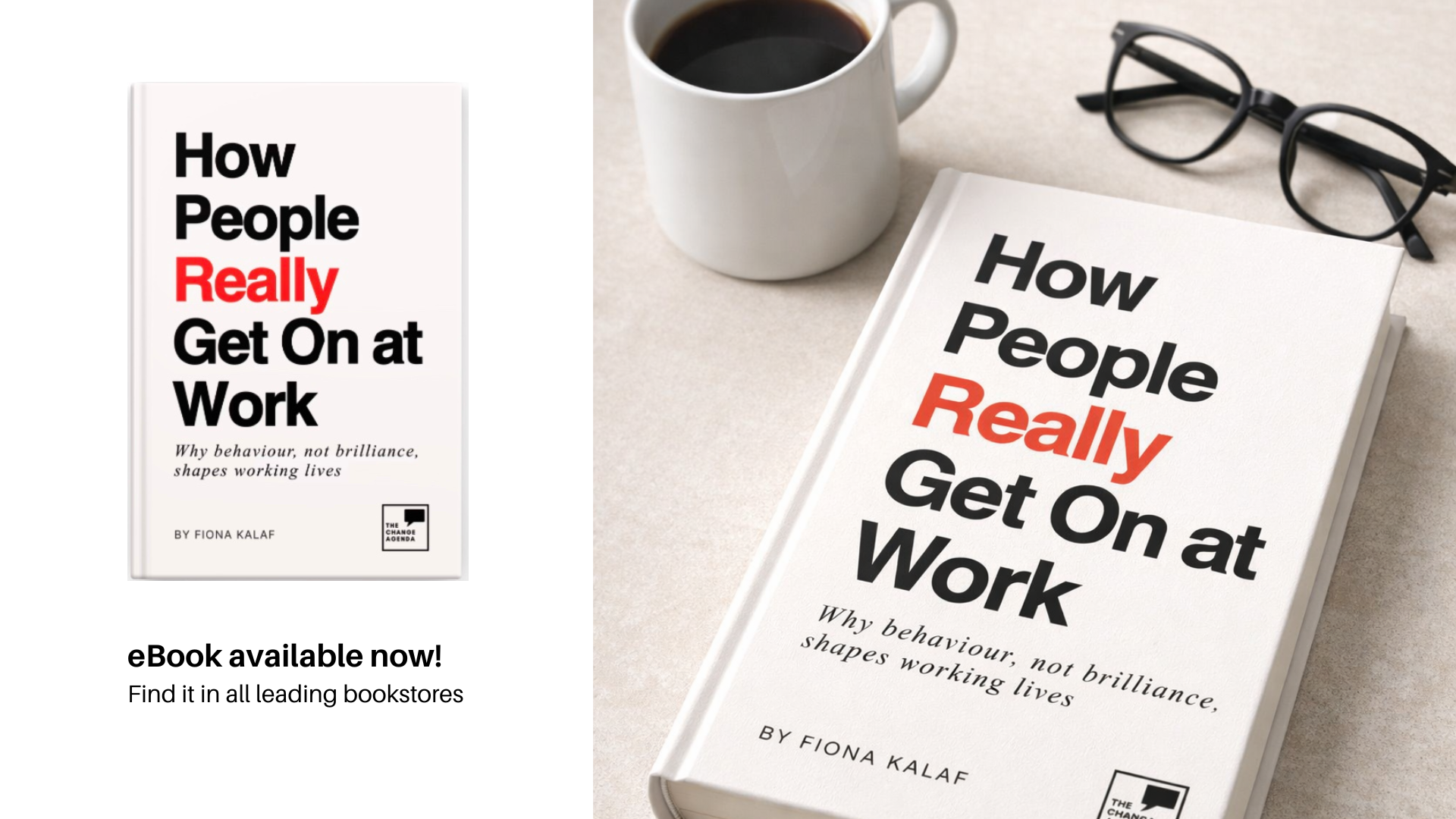
How People Really Get On at Work
As many people return to work at the beginning of a new year, questions about careers, culture and leadership tend to resurface with renewed intensity.
Behind the scenes, The Change Agenda has been working on a project that speaks directly to those questions.
-

From change fatigue to change fluency
Change fatigue has become a familiar condition in many organisations. New strategies, restructures, systems, and priorities arrive in relentless waves, each requiring people to adapt, learn, and deliver — and often without letting go of previous initiatives.
The result is disengagement, frustration, and a quiet erosion of trust.
But the reality is that change isn’t slowing down.
-
Culture change doesn’t start with values, it starts with behaviour
Every organisation has values. They’re often printed on office walls, embedded in onboarding packs, and featured prominently on websites.
They sound aspirational: Integrity. Innovation. Collaboration.
And yet, many companies with beautiful value statements struggle with toxic cultures, inconsistent performance, or resistance to change. Why?
-

Why growth isn’t the same as scaling – and what that means for you
In the business world, “growth” and “scaling” are often tossed around as if they mean the same thing.
They don’t.
And confusing the two can be the reason a promising business — or strategic initiative — hits a ceiling it can’t break through.
-

Leadership in the Age of Ambiguity
We used to think of leadership as navigation: set a clear destination, plot the course, and keep the ship steady.
But in today’s world, the seas are choppier, the maps are outdated before they’re printed, and the weather changes without warning.
Welcome to the age of ambiguity.
-

AI, attention, and the architecture of modern strategy
Strategy used to be about structure, markets, and margins. It still is, but that’s no longer enough.
In today’s world, where artificial intelligence is evolving at breakneck speed and attention is our scarcest commodity, the architecture of modern strategy must be reimagined.
-
From planning to practice: Making strategy stick
Strategy is exhilarating in the boardroom. It’s the space where ambition is framed, futures are imagined, and growth is mapped. But strategy’s true test doesn’t happen in the planning session. It happens in the weeks, months – and oftentimes years – afterward, when people are trying to bring those bold plans to life.
-

The silent power of Psychological Safety
Walk into any high-performing team and you’ll often feel it before you see it. It’s not in the flashy credentials or the polished strategies – it’s in the way people speak, challenge, question, and support one another. It’s not loud. It’s not always easy to name. But it’s the force that turns smart people into extraordinary teams.
-

What the Flywheel model gets right (and the Funnel gets wrong)
For decades, the sales funnel has been the dominant metaphor in growth strategy. It’s clean, simple, and linear – just the way business likes it.
But the world has changed. Customers have changed. The way trust is built has changed.
And the funnel, with all its elegant logic, no longer captures the messy, multi-directional reality of how people choose whom to buy from, partner with, or advocate for.
-
What boards should be asking about social change (but rarely do)
In boardrooms across the country, directors are rightly grappling with questions about risk, resilience, and reputation in a fast-moving world.
Climate change, digital disruption, geopolitical instability and generative AI now regularly feature on board agendas.
But one area remains curiously under-explored: social change – how it’s reshaping expectations, behaviours and trust, and what that means for long-term strategy and leadership.
Get the agenda in your inbox. A short, monthly note from Fiona.

In your cart0 decks · $0.00